t's 6:52 on a Saturday. Someone is awake, and it isn't you. Whether the next hour is a quiet start or a steady stream of requests from the hallway usually comes down to one thing: whether the playroom lets them begin without asking.
We call it a self-serve playroom. It's a room where the first steps of play are obvious, reachable and allowed, so the people using it can get going on their own.
None of it takes a renovation. Most of it is moving things down, turning things around and deciding ahead of time what's fair game. Here's where we start.
BOOKS FACING OUT, AT THEIR HEIGHT
Spines are for grown-ups. Children choose books by the cover, the same way we do in a bookshop, so a shelf of spines tends to go unread. A few picture ledges or a forward-facing rack below the windowsill turns the collection into a display they'll actually browse. Keep a dozen out at a time and swap them every few weeks so there's always something new on the ledge.

BINS THEY CAN READ
A label only helps if the person tidying up can read it. For younger children, a photo or simple drawing of what goes inside does the job a word can't. Picture labels mean nobody has to ask where anything lives, and cleanup stops being a guessing game. Clear or open bins on low shelves help too. If they can see it, they can find it, and they can put it back.
SUPPLIES THEY'RE ALLOWED TO USE
Decide in advance what's always on the table. Crayons, colored pencils, paper, stickers and tape can live within reach, next to a table and chairs at the right height. The paint, the glitter and anything that needs a grown-up can stay up high. Clear limits make a room more independent, not less, because nobody has to wonder whether they're allowed.
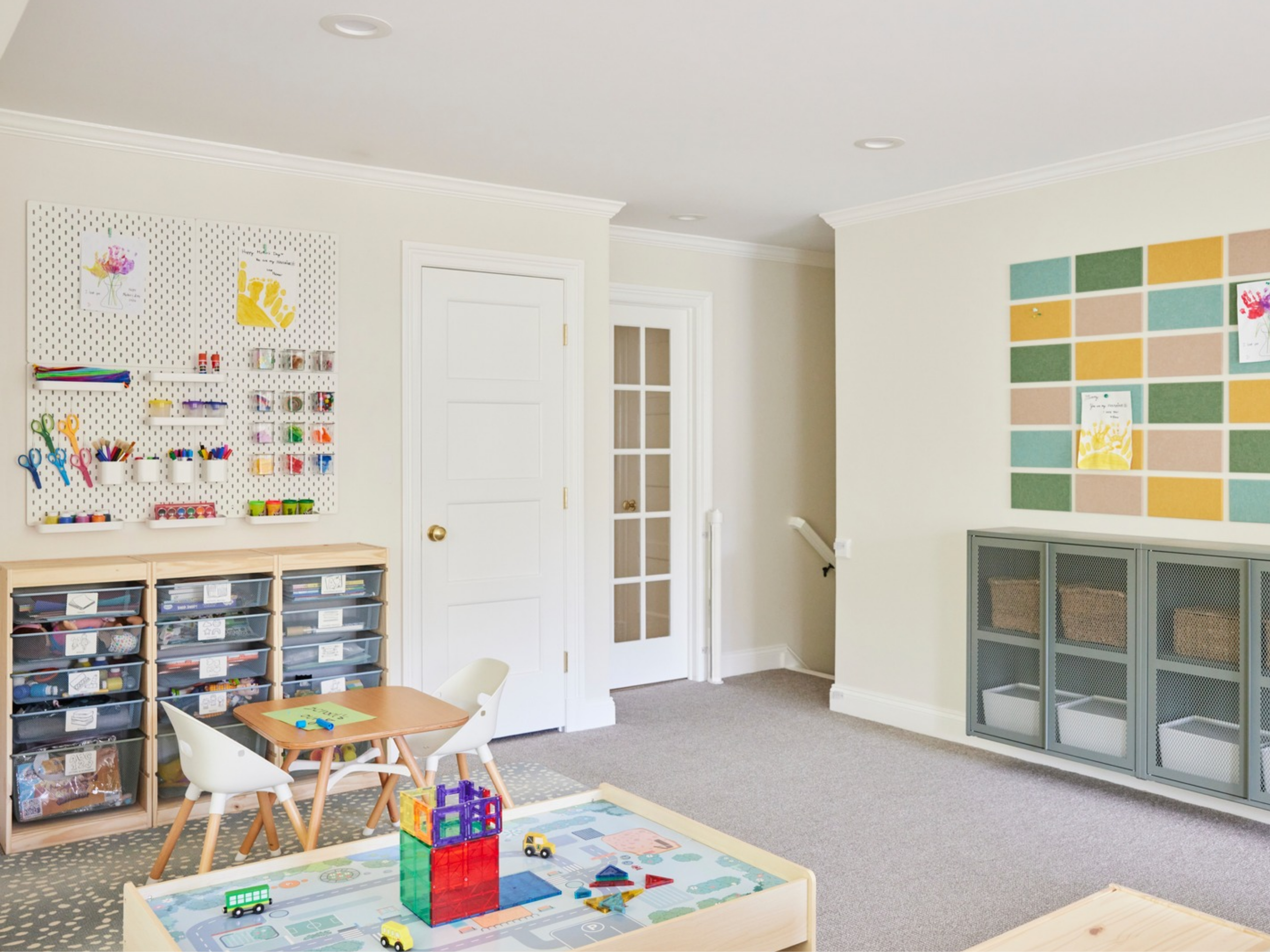
A SOFT PLACE TO LAND
Every self-serve room needs somewhere to settle in: a rug to sprawl on, a cushioned nook, a couch that can handle a spilled cup and a sleepy younger sibling. Choose performance fabrics and washable covers, so the softest spot in the room is never the one they're told to stay off.
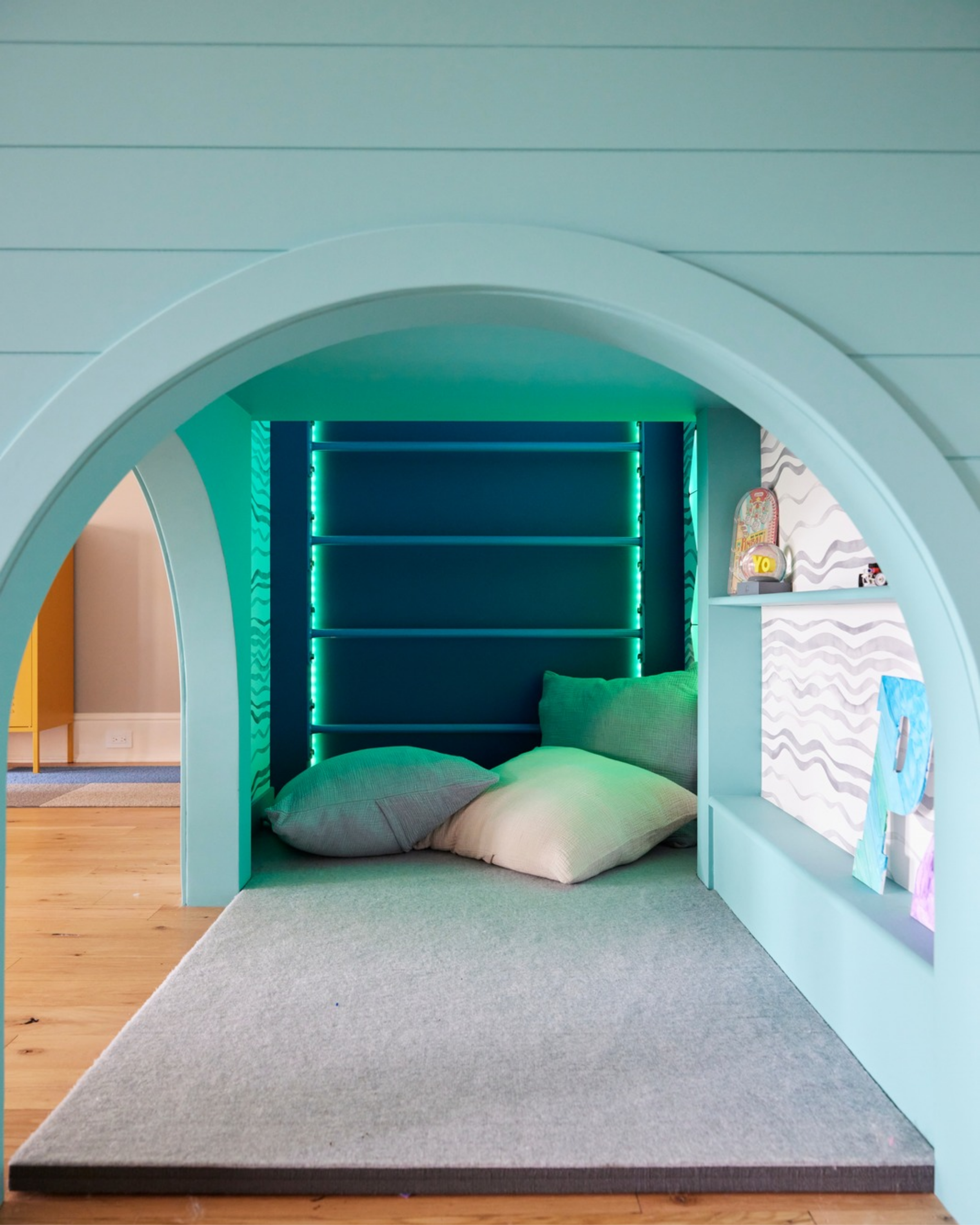
A LIGHT THEY CAN SWITCH ON THEMSELVES
This time of year, early mornings start in the dark. A lamp with a low pull chain, a touch light on a shelf or a switch they can reach means nobody has to be woken up just to see. Warm, low light is kinder at that hour than the overhead, too.
KEEP LESS OUT
A self-serve room works best when there's less to choose from. Too many open bins and the morning turns into dump-and-move-on. Store the rest out of sight and rotate a few things in each week. The room stays calmer, and the toys feel new again.
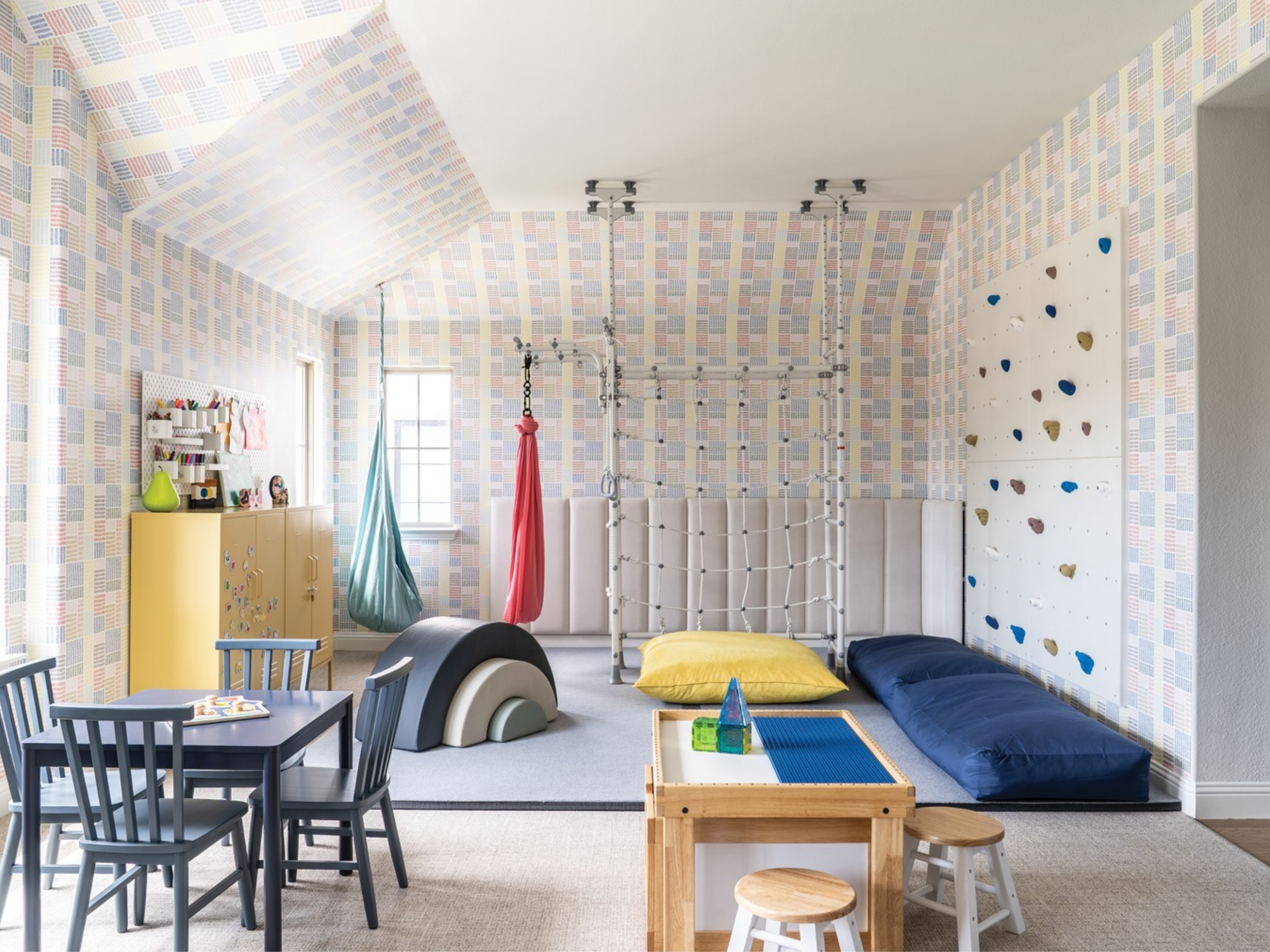
SET IT UP TOGETHER
Walk through the room with your kids once. Show them where the books go, what the pictures on the bins mean, which shelves are theirs and which ones aren't. A room they helped set up is one they're far more likely to use, and tidy, on their own.
A ROOM THAT TRUSTS THEM
Children tend to rise to what a room expects of them. When the books are within reach, the bins say where things go and the rules are settled before anyone has to ask, the room does the work of a patient grown-up. Set it up once, and the coffee stays hot. Mostly.
How does your playroom handle the early shift? Tell us @play.foundry.