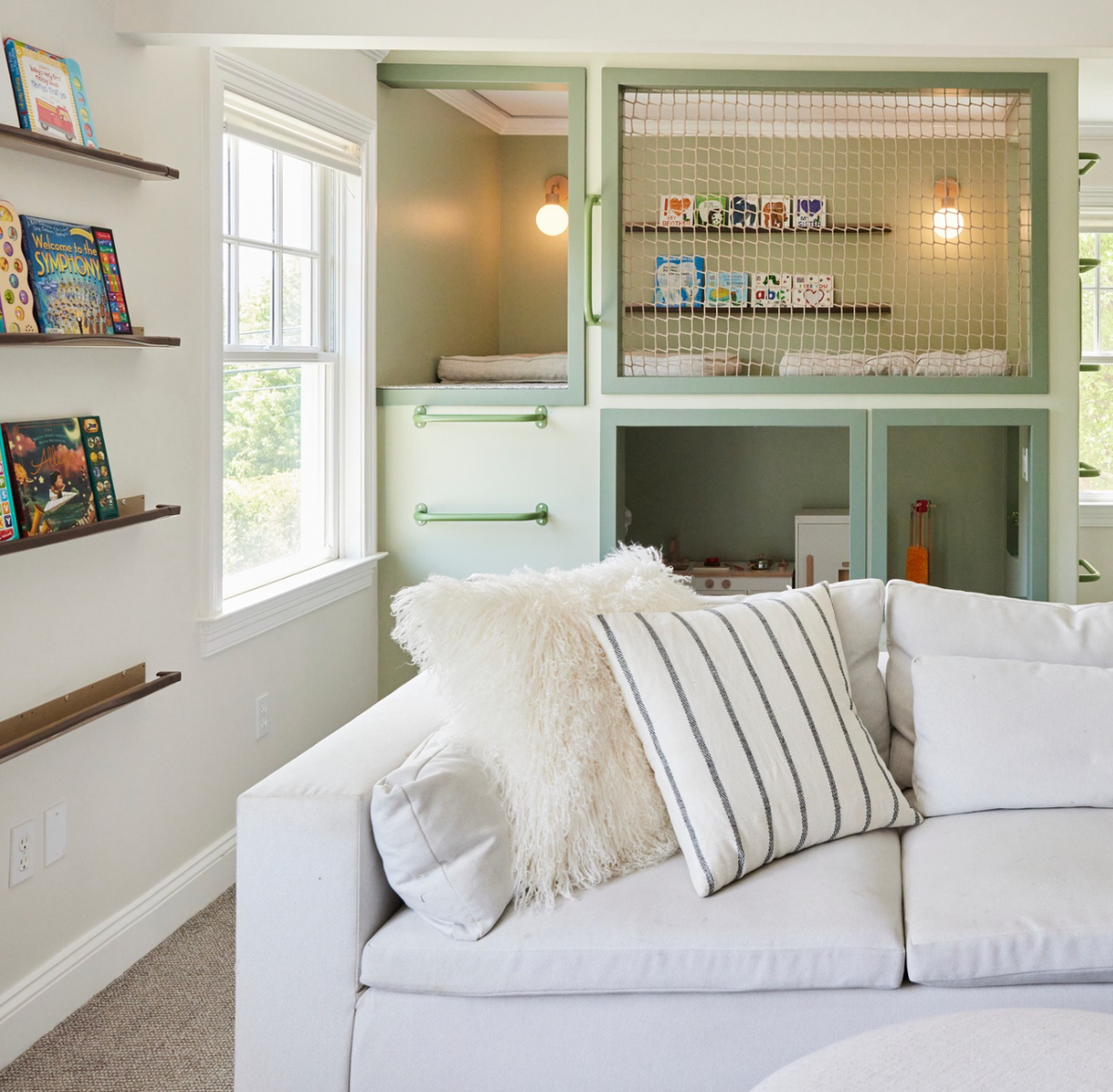

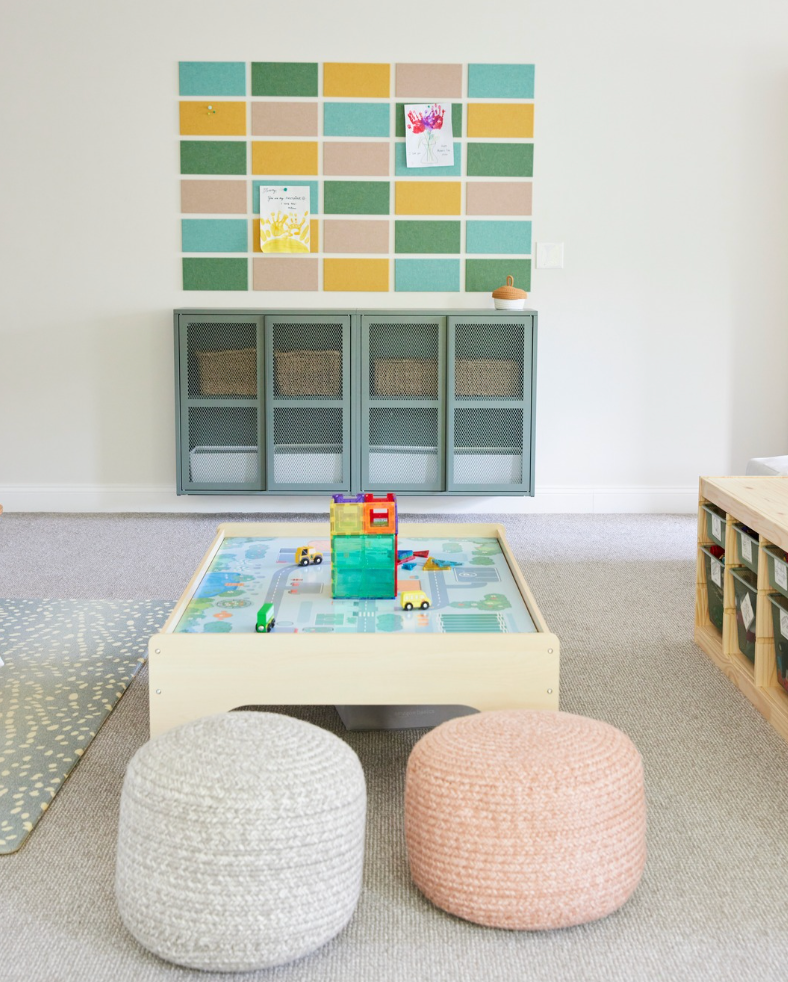
What Makes a Product Playroom-Worthy?
Not every beautiful product belongs in a playroom.
And not every child-friendly product deserves a place there either.
A playroom asks more of an object than most rooms do. The pieces inside it need to be useful, durable, safe, flexible, cleanable, and visually considered. They need to support children without overwhelming the home. They need to hold up to real life while still contributing to a room that feels calm, cohesive, and intentional.
So before we create or curate anything for Play Foundry, we ask a simple question: Is it playroom-worthy?
A playroom-worthy product begins with function. It has to solve a real problem or support a real behavior. Does it help children access materials? Does it create a place to gather? Does it support movement, making, reading, building, organizing, resting, or independence? Does it make the room easier to use? If a product does not serve the way families actually live, it does not matter how charming it is.
The next test is durability. Children are wonderfully physical. They lean, drag, stack, jump, spill, press, rub, drop, pull, and test. A playroom-worthy product must be able to meet that use without constant worry. Finishes should be forgiving. Fabrics should be practical. Construction should be sturdy.
Cleanability matters too. A playroom is not a museum. Materials should allow families to recover from normal life. If something is beautiful but impossible to clean, it may belong elsewhere.
Scale is another essential criterion. Children need to reach. Adults need to sit. Pieces that are too small can become visually disposable. Pieces that are too adult can shut children out of their own space. The best playroom products find the balance.
Flexibility is where a product earns its longevity. Children change quickly. The playroom has to change with them. The strongest pieces can adapt — holding blocks now and games later, pretend play now and homework later.
Visual calm is also part of the standard. A playroom is already full of color, texture, toys, books, projects, and motion. The major pieces in the room should help hold that energy, not compete with it.
We also look for products that encourage independence. Can a child use it without constant adult intervention? Can they see what is available? Can they put something away?
Finally, a playroom-worthy product has to feel worthy of the home. Children's spaces are not lesser spaces. They should be designed with the same care, proportion, quality, and thought as any other room.
When a product passes all of these tests, it becomes part of the room's system. It helps the playroom function. It helps the family maintain it. It helps children use the space more deeply.
Field Note: The right product does not simply look good in a playroom. It helps the playroom work.
Written by Courtney Gault
Visit author's website